
If you have ever wiped down a faucet only to watch the spots reappear a day later, or noticed your soap just will not lather the way it used to, you have already met hard water. It is one of those terms that gets used a lot and explained very little. So let's slow down and walk through it together, the way we would on the phone with you: what hard water actually is, how to tell whether you have it, and the real options for doing something about it.
What Is Hard Water?
You have probably heard the phrase, and you may have heard people say that hardness is on the rise across U.S. water supplies. But what does it actually mean?
Put simply, hard water is water with a high concentration of dissolved minerals, primarily calcium and magnesium. These minerals are picked up naturally as water moves through rock and soil on its way to your tap.
Here is the reassuring part first: hard water is not necessarily unsafe to drink. The trouble it causes is mostly mechanical, not medical. Those dissolved minerals leave behind a white, chalky residue called scale, and over time that scale can quietly work against your home in a few different ways.
Plumbing. Minerals can crystallize inside your pipes, gradually narrowing the path water travels through. The result can be diminished water flow, lower water pressure, and over the long run, accelerated wear on the pipes themselves.
Appliance efficiency. Scale loves to coat heating elements and internal parts. In water heaters, dishwashers, and washing machines, that coating forces the appliance to work harder to do the same job. The practical cost shows up as higher energy bills and a shorter working life for equipment you would rather keep around.
Soaps and detergents. This is the one most people notice first. Calcium and magnesium bind with soap, which cuts down how well it cleans and creates that stubborn soap scum. You see it as cloudy dishes, stained tubs and sinks, hair that feels dull, and skin that can feel dry or irritated after a shower.
Laundry. The same minerals that are rough on your skin are rough on fabric. Clothes can come out of the wash feeling stiff, and over many cycles, hard water adds to the wear and tear on the things you wear most.
Filters and purifiers. This one matters and is often overlooked. High mineral levels can give water treatment equipment a hard time, accelerating clogging, shortening membrane life, and affecting how efficiently a system runs. It is also worth knowing that minerals pass right through certain filters, including traditional carbon filters. That means even filtered water can still leave buildup on your coffee maker, kettle, and other small appliances, because the hardness itself was never addressed.
Do I Have Hard Water?
Hard water can come from either a municipal water supply or a private well, so no home is automatically exempt. The first clue is usually the everyday stuff above: the spots, the scale, the soap that will not cooperate.
If you want to move from suspicion to certainty, you have a few good options:
- Your municipal water report. If you are on city or town water, your utility publishes an annual water quality report that often lists hardness.
- A home test kit. A simple at-home test gives you a quick, specific reading for your own tap. You can find one here: Radiant Life Water Testing.
- National hardness maps. For a regional sense of what is typical around you, the USGS maintains a water hardness map of the United States.
It is worth noting that some experts believe water hardness is increasing across much of the country, particularly in regions dealing with severe drought and groundwater depletion. As water tables drop, the water that remains tends to carry a higher mineral load.
Geographically, the hardest water tends to show up in the Southwest, the Midwest, and parts of the Southeast. States like Arizona, Nevada, Texas, and Indiana are common examples. That said, regional maps are a starting point, not a verdict. Your own home is the one that counts, which is why a direct reading from your tap is always the most reliable answer.
What Do I Do About Hard Water?
Once you know hardness is an issue, the good news is that it is a very solvable one. There are two main approaches, and the right choice depends mostly on how hard your water is and what you are hoping to accomplish.
1. Water Conditioner
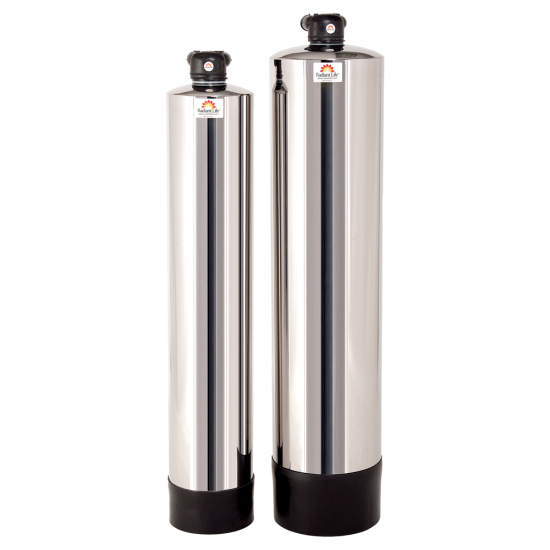
A water conditioner works through a process called Template Assisted Crystallization, or TAC. Water is drawn through a tank filled with modified ceramic beads, which change the physical structure of the calcium and magnesium, transforming them into harmless, stable microcrystals. Those microcrystals can no longer stick to your plumbing and appliances, so scale stops forming.
What many people appreciate about this approach is what it does not do. The naturally occurring minerals stay in your drinking water rather than being stripped out, and the system needs no electricity and no backwash to operate.
Best for: Moderate hard water (below 350 ppm, or 20 gpg), and anyone who wants a zero-waste, low-maintenance setup.
2. Salt-Based Softener
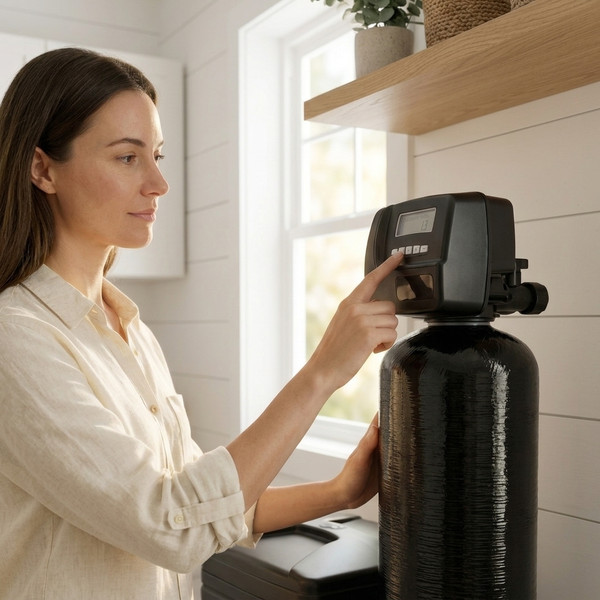
A salt-based softener, also called an ion-exchange softener or a traditional softener, takes a different approach. Hard water passes through a tank filled with resin beads coated in sodium ions. As the water flows by, the calcium and magnesium are pulled out and traded for sodium. Once those resin beads are fully loaded with minerals, the system flushes them with a saltwater brine drawn from a separate salt tank, which recharges the beads and resets the cycle.
Best for: Severe hard water (above 350 ppm, or 20 gpg), and homes already seeing visible scale or experiencing problems with plumbing and appliances.
Conditioner vs. Softener at a Glance
| Water Conditioner (TAC) | Salt-Based Softener (Ion Exchange) | |
| How it works | Crystallizes minerals so they cannot stick | Removes minerals and trades them for sodium |
| Minerals in your water | Retained | Removed |
| Salt required | No | Yes, ongoing |
| Electricity | None | Typically required |
| Water and backwash | No backwash, zero waste | Periodic brine flush uses water |
| Adds sodium to water | No | Yes |
| Maintenance | Low | Refilling salt, periodic upkeep |
| Best for | Moderate hardness (below 20 gpg) | Severe hardness (above 20 gpg) |
If you are not sure which side of that line your home falls on, that is exactly the kind of thing we are happy to help you sort out. The numbers from a water report or a test kit usually make the answer clear pretty quickly.
The Bottom Line
Treating hard water is really about protecting your home: your pipes, your appliances, and the small daily frustrations that add up over time. It is also one piece of a larger picture. Addressing hardness works best alongside good filtration and purification, so that you are protecting your home and improving the quality of the water you actually drink and cook with.
If you would like a hand figuring out where your water stands and which approach fits your home, we would love to help. Reach out to the Radiant Life team and we will walk through it with you.
watersales@radiantlife.com or 888-593-9595